
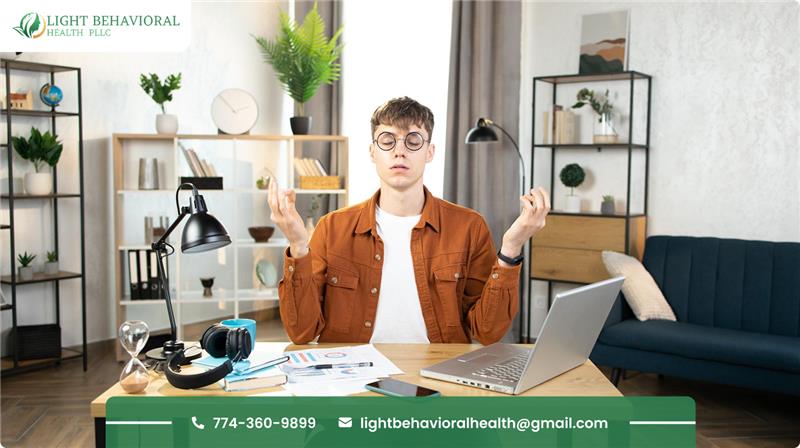
Stress is an inevitable part of everyday life. Deadlines, family responsibilities, and financial pressures can all add up to become chronic stress. This chronic stress can contribute to anxiety, depression, sleep disturbances, and other health problems.
While we can’t completely avoid stress, we can manage it effectively using various techniques. One of the most powerful approaches is mindfulness, which helps train the brain to respond to stress more calmly and intentionally, improving both mental and physical well-being.
A 2023 meta-analysis found that mindfulness-based interventions significantly reduced psychological stress, anxiety, and depressive symptoms in adults. This wasn’t a small study. It reviewed data from over 18,000 participants.
So if you’ve been curious about mindfulness but weren’t sure where to start, let’s break it all down.
What Is Mindfulness?
Mindfulness is the practice of paying deliberate, non-judgmental attention to the present moment. It’s rooted in Buddhist meditation traditions but has been adapted into clinical settings since the 1970s.
Dr. Jon Kabat-Zinn, founder of Mindfulness-Based Stress Reduction (MBSR) at the University of Massachusetts, defines it as: “paying attention in a particular way: on purpose, in the present moment, and nonjudgmentally.”
Mindfulness isn’t about emptying your mind. It’s about noticing your thoughts without getting pulled into them.
Mindfulness Techniques For Stress Management
Not all mindfulness practices deliver the same results. Some have strong scientific evidence supporting their effectiveness in reducing stress, improving emotional regulation, and boosting overall well-being. Below are the mindfulness techniques with the most well-supported clinical backing.
1. Mindfulness-Based Stress Reduction (MBSR)
Mindfulness-Based Stress Reduction (MBSR) is an 8-week structured program developed at the University of Massachusetts Medical School. It integrates body scanning, sitting meditation, and gentle yoga to improve emotional regulation and reduce stress reactivity.
Typical MBSR Program Includes:
- 2.5-hour weekly group sessions
- One full-day mindfulness retreat
- Daily home practice (45 minutes)
MBSR promotes awareness of present-moment experiences and helps participants respond thoughtfully rather than react automatically to stress. Over time, this enhances emotional regulation and resilience.
Tips for Beginners:
- Start with guided MBSR videos or local programs.
- Dedicate a quiet space for practice to reduce distractions.
- Commit to at least 20 minutes daily at home for better results.
2. Diaphragmatic Breathing (Deep Breathing)
Diaphragmatic breathing, also called deep breathing or belly breathing, is one of the fastest and most accessible mindfulness techniques for stress management. It activates the parasympathetic nervous system, which helps switch off the fight-or-flight response.
How to Practice (4-7-8 Method):
- Inhale through your nose for 4 seconds
- Hold your breath for 7 seconds
- Exhale slowly through your mouth for 8 seconds
- Repeat 3–4 cycles
Benefits:
- Immediate reduction in heart rate and muscle tension
- Can be done anywhere, at work, at home, or even in a car
- Evidence-backed and free to practice
3. Body Scan Meditation
A body scan involves systematically directing your attention from your toes to the top of your head. It trains you to notice physical sensations, tension, pain, warmth, without reacting emotionally.
20 minutes of daily body scan practice reduced emotional reactivity and improved stress tolerance among working adults.
A study referenced in mindfulness articles tested 8 weeks of daily 20-minute body scans in 47 young adults. It reduced cortisol stress in both groups.
Practice Tips:
- Lie down or sit comfortably in a quiet space
- Focus your attention sequentially on each body part
- Notice tension, warmth, or tingling, and let thoughts pass without judgment
Benefits:
- Enhances bodily awareness
- Reduces physical tension caused by stress
- Helps improve sleep quality
4. Mindful Movement (Yoga and Tai Chi)
You don’t have to sit still to practice mindfulness. Yoga and Tai Chi combine physical movement with breath awareness and focused attention. A review published in Psychosomatic Medicine found that mindful movement practices reduced perceived stress, anxiety, and physiological markers of stress in multiple populations.
Popular Techniques:
- Yoga: Focus on breath-linked movements and stretching
- Tai Chi: Slow, flowing movements combined with deep breathing
Benefits:
- Enhances body-mind connection
- Reduces muscle tension
- Improves overall mood and flexibility
5. Loving-Kindness Meditation (LKM)
This practice involves directing warm, compassionate thoughts toward yourself and others. It might sound abstract, but the research is solid. A 2015 clinical trial in the Journal of Clinical Psychology found that LKM reduced self-criticism and cortisol reactivity in people with high self-judgment, a huge factor in stress amplification.
Practice Tips:
- Sit quietly and visualize someone you care about
- Repeat phrases like: “May you be happy. May you be safe. May you be healthy.”
- Extend the practice to yourself and even neutral or challenging individuals
Benefits:
- Reduces negative self-talk
- Lowers physiological stress markers
- Enhances emotional well-being and resilience
6. Mindful Journaling
Writing about your thoughts and feelings with curiosity rather than judgment is a form of mindfulness, too. Expressive writing reduces physiological stress markers and improves overall well-being over time.
Practice Tips:
- Write for 10 minutes daily
- Don’t edit your writing; focus on noticing thoughts and feelings
- Use prompts like: “What emotions am I feeling right now?” or “What triggered stress today?”
Benefits:
- Improves self-awareness
- Reduces emotional buildup
- Helps clarify thoughts and identify stress triggers
Table: Mindfulness Techniques Compared at a Glance
| Technique | Best For | Time Needed | Evidence Level |
|---|---|---|---|
| MBSR Program | Chronic stress, burnout | 8 weeks / 45 min/day | Very High |
| Deep Breathing | Acute stress relief | 2–5 minutes | High |
| Body Scan | Tension, sleep issues | 20–45 minutes | High |
| Yoga / Tai Chi | Stress + physical health | 30–60 minutes | Moderate–High |
| Loving-Kindness | Self-criticism, emotional pain | 15–20 minutes | Moderate–High |
| Mindful Journaling | Rumination, overthinking | 10 minutes | Moderate |
Common Barriers to Mindfulness Practice (And How to Overcome Them)
Most people don’t stick with mindfulness because of a few predictable hurdles.
- “My mind won’t stop.” This is normal. Mindfulness isn’t about stopping thoughts. It’s about noticing them without engaging.
- “I don’t have time., Start with 5 minutes. Research shows that even brief mindfulness interventions improve stress response over time.
- “I don’t know if I’m doing it right.” There’s no perfect way. Showing up consistently matters more than technique.
- “It feels pointless.” Give it 4 weeks. Most people don’t feel the shift until around week 3 or 4 of daily practice.
When Mindfulness Alone Isn’t Enough
Mindfulness is powerful. But it’s not a standalone solution for everyone. If your stress is rooted in a deeper mental health condition, like generalized anxiety disorder (GAD), PTSD, or major depressive disorder, you may need professional support alongside these practices.
Cognitive-behavioral therapy (CBT) combined with mindfulness (known as MBCT, Mindfulness-Based Cognitive Therapy) has strong clinical evidence for preventing depressive relapse. A 2016 meta-analysis in JAMA Psychiatry found MBCT reduced relapse risk by 43% in patients with recurrent depression.
Working with a licensed mental health professional can help you identify which approach fits your needs.
How to Build a Sustainable Mindfulness Habit
Consistency beats intensity every time. Here’s how to make mindfulness stick:
- Start with 5–10 minutes daily, same time each day
- Pair it with an existing habit (morning coffee, bedtime routine)
- Use apps like Insight Timer or Calm for guided sessions
- Track your mood before and after each session
- Be patient, neuroplastic changes take weeks to develop
Mindfulness techniques for stress management are not a trend; they’re evidence-based tools that change how your brain and body respond to stress. Whether you start with deep breathing, a body scan, or a full MBSR program, what matters most is showing up regularly.
Stress may not be avoidable. But your relationship with it absolutely can change.
Get Expert Care at Light Behavioral Health PLLC Today!
Are you feeling stressed and anxious? We understand that it can be overwhelming. You don’t have to figure this out alone. The team at Light Behavioral Health PLLC specializes in evidence-based approaches, including mindfulness-integrated therapy, to help you manage stress, anxiety, and more.
Visit Light Behavioral Health PLLC today and connect with experienced mental health professionals who are here to help.
Frequently Asked Questions
How long does it take for mindfulness to reduce stress?
Most research shows measurable improvements in stress and anxiety within 4–8 weeks of consistent daily practice. Even short sessions (5–10 minutes) can produce benefits over time.
Can mindfulness help with work-related stress?
Yes. Studies specifically targeting occupational stress have found that mindfulness reduces burnout, improves focus, and lowers emotional exhaustion in workplace settings.
Is mindfulness the same as meditation?
Meditation is one way to practice mindfulness, but not the only way. Mindful walking, eating, and even conversation can all be forms of mindfulness practice.
Can mindfulness replace therapy?
Not necessarily. Mindfulness is a valuable complement to therapy but may not be sufficient on its own for clinical anxiety, depression, or trauma. A licensed therapist can help determine the right combination.
Are there any risks to mindfulness practice?
For most people, mindfulness is safe. However, some individuals with trauma histories may find that certain practices intensify distressing feelings. A trauma-informed therapist can help guide practice safely.